Suspended in the air by his bucket, unharnessed, his winch snapped and Dale Guetersloh shot 35 feet into the air from his truck, knocking him unconscious. He’d been taking down a power pole, then woke up face-down in gravel, coughing up blood, unsure how badly he’d been hurt.
Only when he regained consciousness and looked down did he realize he couldn’t move his wrist. He managed to walk away that day in 2003 with only a torn lip, a mangled wrist and another story that could have ended far worse.
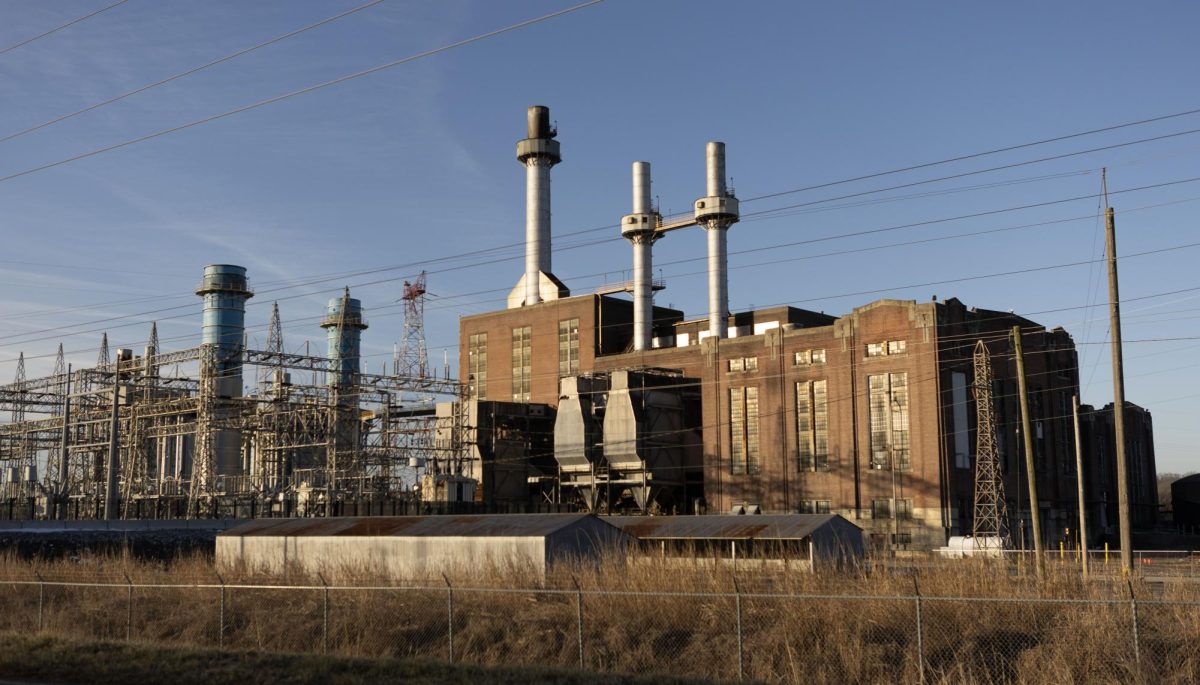
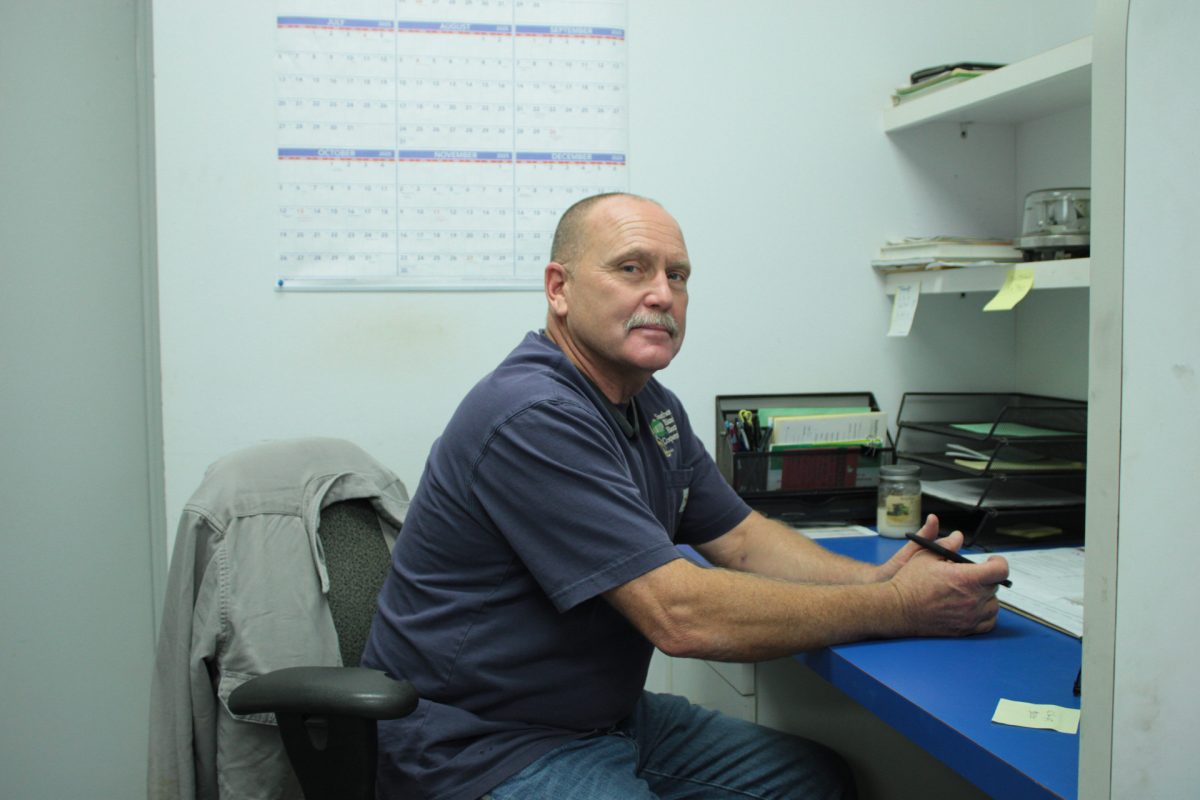
Now 60, Guetersloh is still out in the elements at dawn — and at all the unpredictable hours that outages and southern Illinois weather demand. He’s one of dozens of linemen across this rural region who keep the power grid alive.
Advertisement
Guetersloh is the serviceman for the Southern Illinois Electric Cooperative’s outpost in Metropolis. At the southernmost tip of the state, he watches over territory in Johnson and Massac counties, plus a sliver of Pope County.
He chuckles when he recalls his start in the business.
“I can remember when I was in my early 20s and my dad said, ‘I’d like to get you set up and get you to the union hall and get you in,’ and I’m thinking, ‘Man, my uncle got killed doing that,’” Gutersloh said. “I mean, why would I want to be a part of that?”
Yet decades later, Guetersloh became part of that workforce — one most people only notice when the lights go out.
A family tradition
As climate change amplifies the amount of severe weather that sweeps through the country, linemen face an increasingly challenging — and sometimes thankless — job. In southern Illinois, that job is made even more difficult by the vast territories lineman cover. On a day-to-day basis, Guetersloh drives around 120 miles managing his lines. Years on the same route have etched it into his memory.
For Guetersloh, climbing power poles is a family tradition.
Born and raised in Murphysboro, Guetersloh grew up the son of a well-known and respected lineman for Central Illinois Public Service Co., which later merged to become Ameren Illinois. He still remembers winter nights as a child when the wind howled outside his bedroom window. He said he would hide under his covers and think about his dad working outside — and how crazy he was for doing it. Then, he followed in his footsteps.
Advertisement*
Before entering line school at American Line Builders Training, or ALBAT, he tried his hand at carpentry and railroad construction.
But his father, who died two years ago, encouraged him into the family trade. He wasn’t sure. He’d already seen the job take loved ones. His uncle’s partner, while driving them back to headquarters after a long shift in a bad storm, fell asleep at the wheel. His truck veered off the road and rolled. His uncle didn’t make it. That wasn’t the only loss.
“Outside of that, I’ve had three personal friends of mine that died in this trade also. And so for me, the risk is tremendous,” Guetersloh said.
His ALBAT training involved three weeks in Medway, Ohio, where he learned how to climb poles and absorbed the basics of electrical theory. After graduation, he began his apprenticeship in 1992, contracting with big-name companies like L.E. Myers until he earned the status of journeyman and accepted a full-time job with Ameren.
He’d had his own young family by then and needed to provide. Suddenly it didn’t look so bad on the other side of the door his dad had opened. But learning the job isn’t easy. It takes three and a half years and 7,000 working hours to reach journeyman status. And that, he said, is just “the bare minimum knowledge.”
There have been improvements over the years. Technology has helped, and so have better safety standards compared with the 1990s.
Guetersloh started out doing most of the work by hand. His body paid the price.
“We used to climb every single day — every day,” Guetersloh said. “If you can get a truck there, it’s far safer, it’s way more productive.”
The work can be dangerous. But Guetersloh hasn’t exactly spent his free time playing it safe either. He jokes he can’t blame the job for all his injuries — some are “self-inflicted.” Blame his affinity since boyhood for riding and racing dirt bikes.
He left the hospital with a hematoma in his leg and a hurt shoulder from a Labor Day accident in 2025. He recently underwent rotator cuff surgery to repair repeated trauma to his shoulder. And when he’s forced to recover from an injury, it’s his mood that takes a beating — he “gets into a depression,” he said.
But with his job as Metropolis’ serviceman, he is rarely idle. He’s the first to receive a call anytime there’s an outage in the region he covers near the Kentucky border. And when the phone rings, he’s out the door.
“I am on call 24/7, 365. The only time I’m not on call is if I take a vacation,” Guetersloh said. “It’s part of the trade.”
He’d grown used to that call to duty as a kid, watching his dad rush for the door. Not everyone adjusts.
“For some guys that are new into this trade, that concept of the phone ringing all the time like that, and them having to drop whatever they’re doing to leave, that’s not quite so easy for them.”
Eventually, Guetersloh parted ways with Ameren and went to work for SIEC. The overtime at Ameren paid well, but with long, demanding hours he’d started to feel like his kids hardly knew him.
He also liked the idea of working for cooperatives like SIEC, which are independent and member-owned. Although co-ops’ rates may be slightly higher than Ameren’s, Guetersloh said quality and trust make up for it. So does reach. Their lines extend into the most remote rural corners of the state — places that wouldn’t have power without them.
Their hearts can extend pretty far, too. Part of a serviceman’s job is to shut off power when bills are overdue. But Guetersloh, who works in one of the poorer parts of Illinois, can’t always bring himself to do it.
“I’ve paid some bills before for people that I could tell were in a very, very bad way,” Guetersloh said. “I’m a softy for that kind of stuff.”
Linemen as first responders?
When major storms hit, the job quickly extends beyond routine outages. Linemen are often called across the country to rebuild damaged power lines after hurricanes, ice storms or tornadoes leave communities without electricity.
Stanley Treat, a colleague of Guetersloh’s who works as a serviceman at SIEC’s Dongola headquarters, has seen that firsthand. After Hurricane Katrina devastated Louisiana and Mississippi in 2005, Treat was among thousands of linemen sent to rebuild the electrical grid.
This frontline disaster work has fueled a national conversation about whether linemen should be formally recognized as first responders. The Homeland Security Act of 2002 excludes the profession from the federal definition. In 2021, U.S. Sen. John Kennedy of Louisiana introduced the Lineman Legacy Act aiming to change that, though the bill didn’t advance out of the Senate.
Given that linemen are called out into the elements alongside rescue and medical crews in natural disasters — to protect the public, at risk to their personal safety — Treat sees it as recognition that’s been earned.
“You can’t beat mother nature,” he said. “If you’re working on a line — even though you have the line grounded — if a lighting strike comes on that line, you’re gonna get hit by that lighting,” he said.
Like Guetersloh, Treat also comes from a family of linemen. His stepfather and great uncle both worked for SIEC.
Guetersloh knew the job was dangerous when he lost his uncle. He experienced it firsthand while helping restore power after a storm in Michigan. Before crews headed out, workers were told they had already lost one lineman during the restoration effort.
“As soon as he touched the gate, he died right there,” Guetersloh said.
“I remember very well, the guy that was with me — Jason — he looked over at me and he said, ‘Dude, I’m scared to death.’ and I said, ‘that makes two of us.’”
Still, he isn’t convinced that linemen need a first responder designation on a day-to-day basis. Safety is key, though, he said.
Craig Sondgeroth, president and chief executive officer of the Association of Illinois Electric Cooperatives, said safety is an ongoing topic of its member cooperatives, and the association has “worked tirelessly to reduce incidents and improve training.”
“Electricity is unforgiving and can be deadly in an instant,” he said. “Every time we invest in safety, we invest in someone’s life. That’s worth every effort.”
‘All about servanthood’
For Treat, linework is “all about servanthood.” After graduating high school in Dongola, Treat had planned to go straight into the Navy with his best friend, but felt called to the lines. His job managing seven substations keeps him busy — from routine maintenance to the unexpected.
“It just takes a squirrel, or a coon, or a tree limb, or somebody running into a pole — or I mean, just a number of things that can break — and it can happen in seven different substations,” Treat said. “And so I get a lot of calls.”
Treat, who also farms cattle, has seen a lot of changes in the region. The co-op also has fewer members than it once had because of population decline and families downsizing and selling farmland.
“You don’t have the families here. You don’t have the schools. You don’t have the attendance in the schools. It just keeps getting lower and lower in this south end, because there’s not a lot of jobs,” he said. “And so people are moving to the areas where there is work and more stuff is offered. We’re not selling enough power through irrigation and grain bins.”
Some parts of SIEC’s line connect to vacant homes. But that doesn’t make the job easier — those lines still have to be maintained.
Between Treat and fellow serviceman Guetersloh, the two share more than 62 years of experience on the job.
Guetersloh is preparing to retire soon.
“Would I encourage my own kid if they were willing to get into this trade? Probably not,” Guetersloh said. “I just think there might be an easier way to make a living. So here I am 60 years old, I’ve had a lot of injuries over the years. I’ve had both of my knees operated on, both of my shoulders operated on, my teeth knocked out. Right now it’s all OK.”
Yet over time, he accepted that the job was his calling. He takes pride in putting people’s lights back on and thrives when he can troubleshoot an outage.
“My dad’s been gone for two years, but I thanked him countless times for giving me the opportunity and me finally doing it because I really do love doing that. I really do. So I think that was just what I was supposed to do.”
Staff Reporter Kristin Borchers can be reached at [email protected]
Advertisement