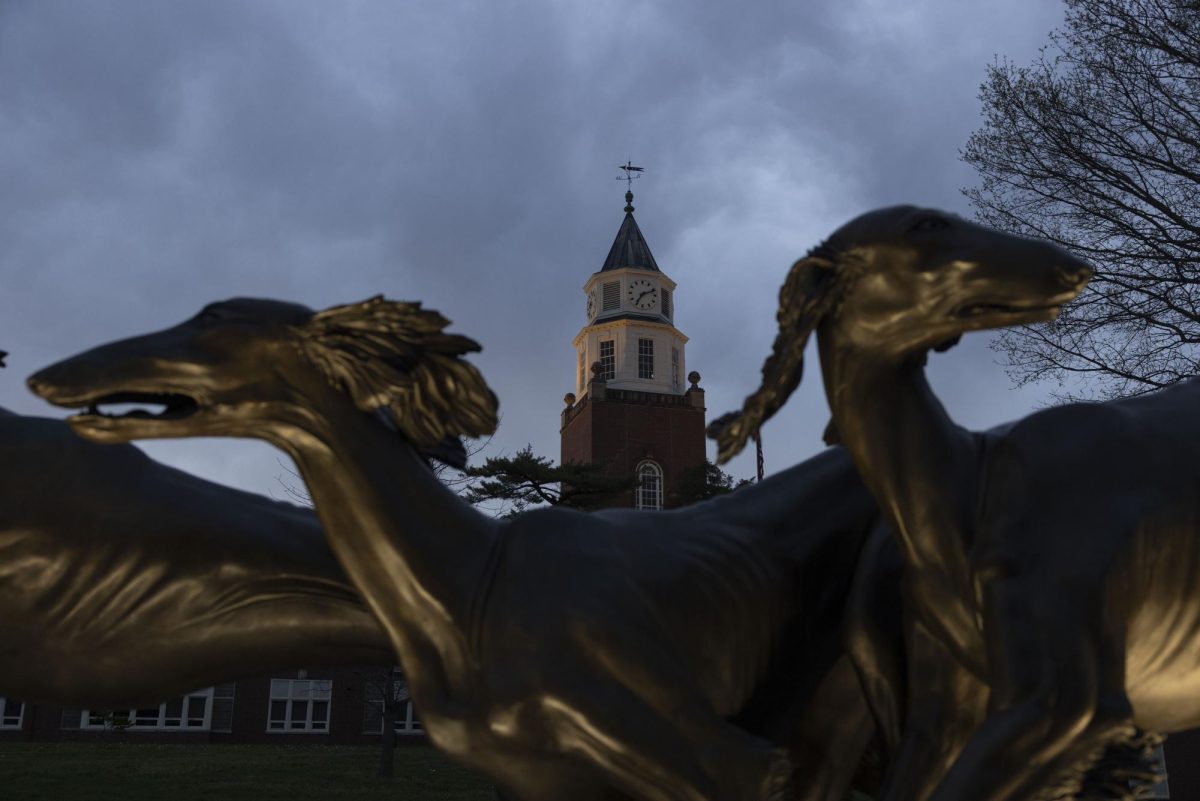
Southern Illinois University has established a regional African American Heritage Center aimed at preserving and promoting the history of Black communities across southern Illinois.
The Southern Illinois African American Heritage Center, located on the sixth floor of Morris Library, recently received temporary approval from the Illinois Board of Higher Education. The university plans to seek permanent approval for the center after four years.
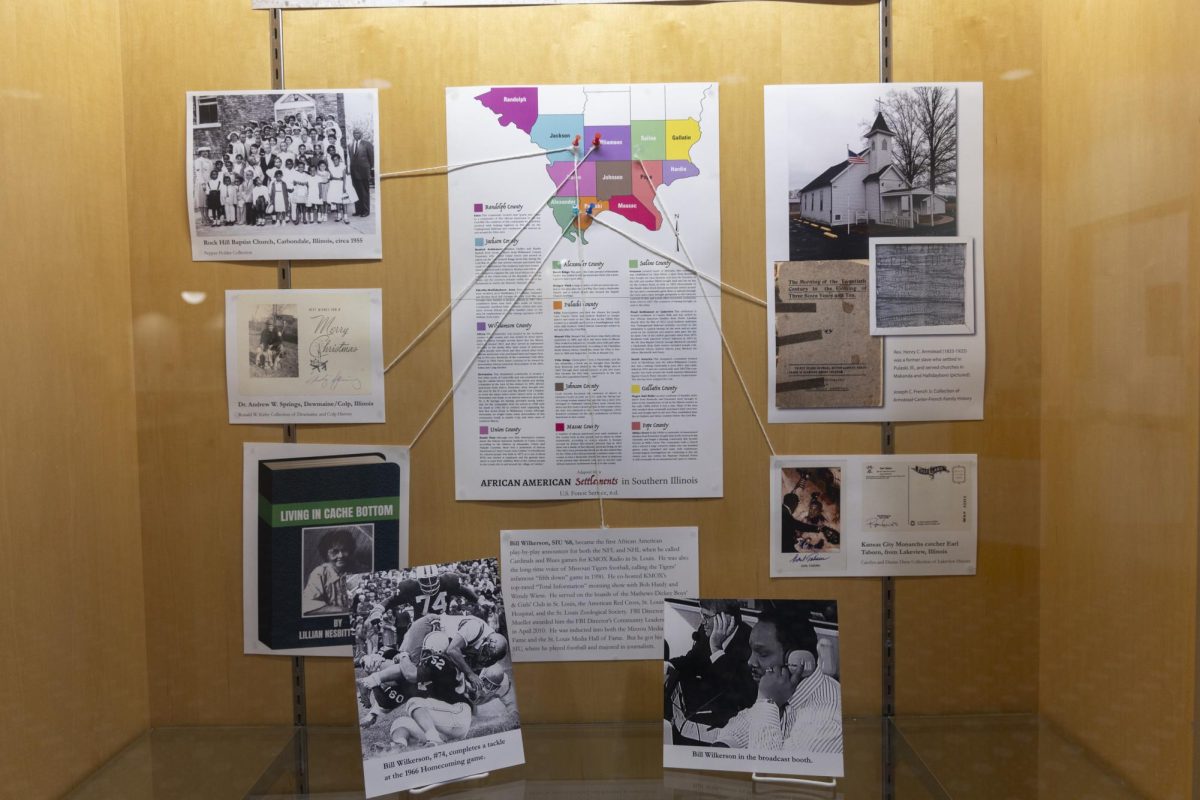
The center will serve the 30 southernmost counties in Illinois, including the Metro East, and is expected to connect researchers, students and community members with historical resources, oral histories, family records and heritage sites throughout the region.
Advertisement
According to the news press release by SIU, the center’s steering committee recently visited Brooklyn for its induction as an historic waypoint on Route 66.
Anne-Marie Hamilton-Brehm, associate dean of Library Affairs at SIU and a member of the center’s project steering committee, said the center grew out of years of work to uncover and preserve Black history that has often been overlooked or left out of traditional historical records.
“Elevating stories that have been silenced or put aside is important to me,” Hamilton-Brehm said. “I like to stand up for the stories that matter.”
The center’s proposal grew from the Special Collections Research Center’s “Reclaiming the African American Heritage of Southern Illinois” project, an initiative that began several years ago involving Hamilton-Brehm, SIU history professor Pamela Smoot, political papers archivist Walter Ray and community members.
The project originally focused on helping communities, churches and families preserve their own histories. As researchers began working with communities, they discovered a larger need to connect individual projects and create a central location for research and education.
Hamilton-Brehm said the center became necessary because the people working on the project had other university responsibilities and could not complete every project themselves.
“We just realized that it would really be better to have a dedicated center, eventually with a director and its own staff, who could serve as a hub of research and heritage tourism for southern Illinois,” Hamilton-Brehm said.
Advertisement*
The center’s organizers hope to use the space to connect people with historical sites throughout southern Illinois while also encouraging communities to preserve their own records.
Plans for the center’s first four years include historical presentations, community events, family history preservation workshops, oral history projects, collecting regional family records, engagement with K-12 schools and access to books and documents related to African American history in the region.
Hamilton-Brehm said the center is also interested in digitizing family histories. Families can provide photographs, documents and other materials to be digitized and returned to them.
The center is also accepting potential donations of historical materials from families and communities and funding.
“Everyone’s history and family history is valuable,” Hamilton-Brehm said.
Pamela Smoot, a co-founder of the center, said one of the center’s primary goals is to document the history of individual Black communities and the people and institutions that helped build them.
“People matter. The institutions matter,” Smoot said.
Smoot said oral histories are particularly important because they can fill gaps left by written records. She also said southern Illinois is home to a larger number of notable African Americans than many people in the region realize. Among them are Madame C.J. Walker, who built a successful Black hair care and cosmetics company; Oscar Micheaux, one of the first major Black filmmakers; Archibald Moseley, a Tuskegee Airman, Congressional Gold Medal recipient and ordained minister; Charles Neblett, a civil rights activist and one of the original Freedom Singers; and Eurma C. Hayes, a longtime Carbondale community activist whose legacy is honored through the Eurma C. Hayes Center.
As part of a graduate oral history course Smoot taught several years ago, students interviewed members of southern Illinois communities about their histories. One student documented the history of Hopewell Baptist Church in Carbondale, which Smoot said had no written history.
Other oral history projects examined communities and experiences that may not be fully represented in traditional historical accounts.
Smoot said gathering these stories can help communities establish a more accurate record of their past.
“We can help gather information and explain how these people actually settled in Carbondale, Illinois, for example,” Smoot said. “It’s important to gather up all the history so that we can keep the story straight, tell the story and be able to keep the story straight in terms of facts.”
The need to document southern Illinois’ Black history is especially important because much of the state’s African American history is commonly associated with Chicago, Smoot said.
Southern Illinois, however, has its own history of Black settlement, activism and community development.
Hamilton-Brehm pointed to the region’s history before and after Illinois became a state in 1818. She said free Black people and formerly enslaved people established communities in southern Illinois before the Civil War, with some communities playing roles in the Underground Railroad.
She cited Miller Grove, where archaeological research has uncovered lead type that researchers believe could indicate the printing of abolitionist materials in addition to the community’s role in the Underground Railroad.
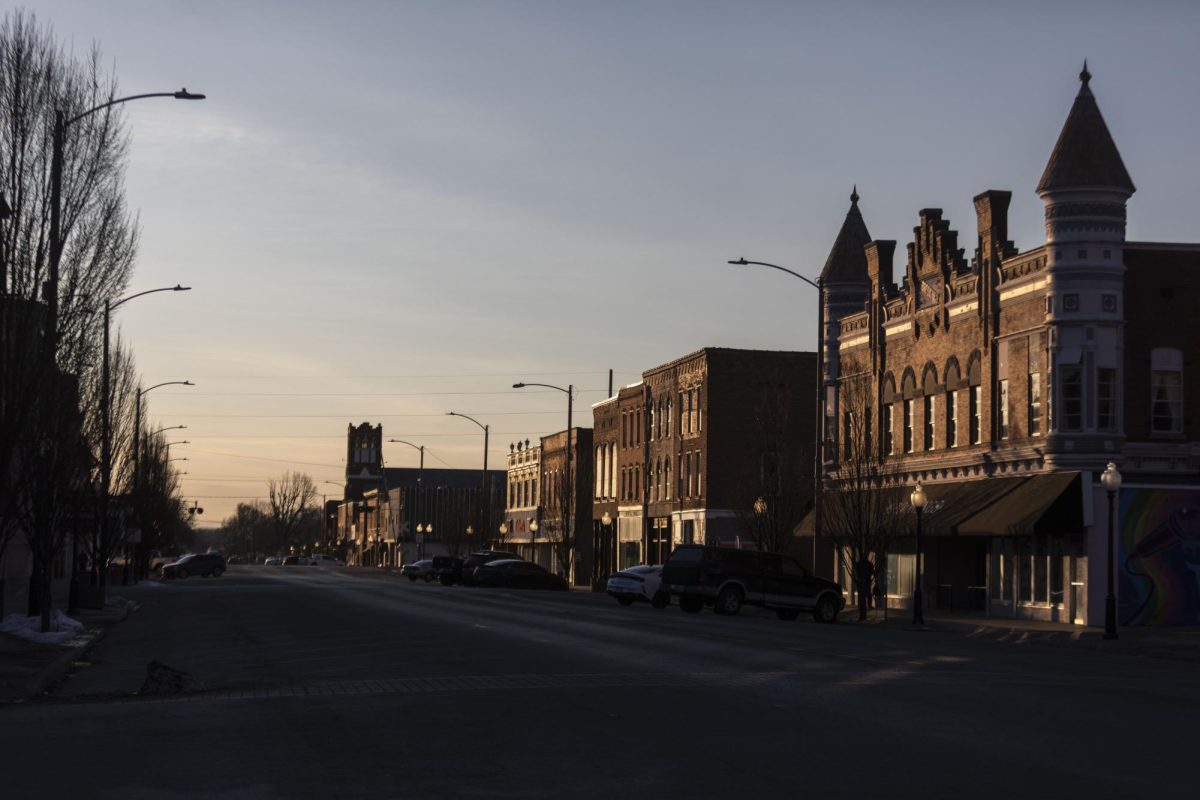
Hamilton-Brehm also pointed to Brooklyn, Illinois, which was founded in 1829 by formerly enslaved and free Black people. The community’s church was used as part of the Underground Railroad and includes a trap door beneath the altar that was used to hide people escaping slavery.
Hamilton-Brehm said stories like these demonstrate why southern Illinois’ African American history deserves greater attention.
“I think there’s so much to learn about and so much for us all to be proud of when we learn the real history of the place where we live,” Hamilton-Brehm said.
The center also hopes to document the experiences of Black families and communities whose stories have been lost, minimized or excluded from historical records.
Hamilton-Brehm cited the example of Stephen Bostic, a successful Black farmer who lived south of Murphysboro and established a settlement with family and friends. Bostic paid to have his portrait included in the 1907 Jackson County Atlas, but Hamilton-Brehm said his photograph was separated from those of other farmers because of his race.
For Smoot, preserving local history is especially important for younger generations.
She said African American history should extend beyond nationally recognized civil rights figures and events to include the history of the communities where people live.
“Everybody needs to know where they came from and how they got there,” Smoot said.
Smoot said she hopes the center will eventually become part of campus tours for prospective students and serve as a place where students from southern Illinois can learn about the history of their own communities.
She also envisions students visiting the center for Black history lessons focused on individual counties and communities throughout the region.
Hamilton-Brehm said the center will begin hosting presentations and events this fall. Organizers also plan to develop a speaker series and create opportunities for students to use the space for study groups.
The center will be open to students and community members, with books available for visitors to read and check out when the library is open.
The university is also working to raise money to support the center. Once fully operational, organizers may consider developing a satellite office in St. Clair County, potentially at SIU Edwardsville’s East St. Louis campus, to focus on projects in the Metro East.
For Hamilton-Brehm, the center represents more than an effort to preserve historical documents. She said it is an opportunity to bring together communities, researchers and students while highlighting stories that can inspire future generations.
“I’m proud of this project, but everybody who has worked on this project is excited and proud,” Hamilton-Brehm said. “We’re really just getting started here, but I’m excited for the future.”
Smoot said the center’s creation was a collaborative effort that required support from university administrators, faculty, staff and community members.
“We couldn’t do this without each other,” Smoot said. “We can achieve more. And this center is an example of that.”
Community members interested in contributing family records or historical materials can contact SIU’s Special Collections Research Center or call (618) 453-2516 to discuss preservation, digitization or potential donations.
Staff Reporter Yahri Edmond can be reached at [email protected]
Advertisement