Sometime in 2017 in a classroom at Galatia Junior High — after third period art class and before square pizza paired with milk for lunch — yours truly was 13 and watching a teacher put a condom on a banana. Suddenly, everyone forgot how to make eye contact and classmates giggled in the back about anatomy vocabulary.
I remember being confused as to why as a woman, I needed to learn how to put on a condom. I am sure there are situations where that could be helpful, but it seemed like a straightforward concept. I also remember wondering why I learned so much about anatomy that was not my own. I feel as if we spent most of our time in sex ed talking about the male anatomy, like female anatomy was too awkward, too complicated or too taboo to speak about.
Advertisement
When women’s bodies were mentioned, we did the basics. We were told that we would have our periods — which would mean we could get pregnant, that our breasts would grow — which means we have to check for breast cancer, and that we should never touch alcohol, drugs or attend parties because that means we would be easier to sexually assault.
Also: we should never have sex. Abstaining from sex was the only way to not catch a sexually transmitted disease, become pregnant or die in labor. We breezed over birth control, safe sex methods and contraceptives in general — like the only option was to fully abstain from sex — forever.
Mollie Peterson, a classmate who sat in the same unhelpful, awkward sex ed class with me, remembers the same experience. Peterson is a senior at Saint Louis University studying biology and health sciences and is en route to attend Physician’s Assistant school after graduation, because she feels so passionately about educating women on their bodies.
Advertisement*
Peterson explained how sex ed didn’t teach her about her own body. She had to take it upon herself to learn about menstrual cycles and hormone fluctuations, something not covered in our sex education course.
“I should have learned that in sex ed,” Peterson said. “Sex ed is so much more than just sex, it’s about teaching teenagers about their bodies so they can better understand themselves and feel comfortable in their own bodies.”
Men operate on a completely different schedule than women do. This is something Peterson and I had to do our own extensive research about. Women operate on a 28-day hormone cycle, which includes four different phases.
Women experience the follicular phase, where oestrogen and testosterone levels begin to rise. During the luteal phase, after ovulation, progesterone levels rise while oestrogen and testosterone start to dip. Finally, in the premenstrual phase, hormones decline further, often leading to the emotional and physical symptoms we know as PMS.
Men, however, work on a 24-hour cycle, where testosterone peaks in the morning and falls at night.
These phases affect everything about women’s bodies, including mood, sleep, weight, sex drive and even how our skin and face appear, something that was never covered in our sex ed course.
Women still operate in a 24-hour cycle world. Not that we can’t handle it, because we can. However, if men worked on a 28-day cycle, tampons would probably be free, birth control would be passed out like condoms, and they would have invented paid time off for periods.
Not to mention menstrual products are still treated like an optional expense in several places. Period products aren’t even fully safe for women to use, either. Fourteen different brands of menstrual products have toxic materials in them, such as lead, arsenic, and cadmium. These materials can cause several health risks such as heart issues and heavy metal poisoning. If everyone had a period once a month, there would probably be a law signed about ingredients inside tampons
Sex ed is not the only place that did not want to speak about women’s health. Women’s health is often dismissed in the health care field. A 2025 survey from Psychology Today of 900 women aged 25-34 found that 93% reported feeling dismissed when seeking medical help.
Personally, I feel like I could walk into a doctors office with a missing finger and they would ask about my birth control, check my hormones, then make me take a pregnancy test.
For example, I went into the ER with severe nerve pain in my face, and before anyone asked any questions about the pain, I had to take a mandatory pregnancy test. Sure, there are medications you cannot take while pregnant, and I understand the procedure, but I felt like there were more important things to handle at the moment.
“Science and medicine have been controlled by old white men for years and years,” Peterson said. “Women aren’t taken seriously. Our concerns are often overlooked, pushed aside and assumed they are ‘made up’ because there either isn’t a good, easy explanation for what is going on, or because women are seen as emotional, sensitive, or dramatic, so we must be exaggerating our concerns, obviously.”
Women’s health is also woefully under-researched, which may be why we learned so little about our own bodies in sex ed. Before 1993, women were rarely included in clinical trials. That was only 33 years ago. The World Wide Web has been around longer than women have been represented in clinical trials. “Jurassic Park” has been around longer than people taking women’s health seriously.
Peterson said that she also remembers the weird purity culture around sex ed. They taught us abstinence as if we were students in a church youth group instead of a public school classroom.
“A lot of schools bring religion into their classroom and premarital sex is highly frowned upon in Christian culture,” Peterson said. “Also, I think it would piss parents off if their kids learned about sex, including male and female bodies and how they function, because they shelter their kids or they are also religious.”
According to the World Population Review, most people lose their virginity around the age of 17. So teachers should teach students how to safely have sex, not just putting a condom on a banana, then telling us the condom will break and we will become pregnant and also contract an incurable STD.
“They basically just stressed that the only way to not have anything bad happen to you is to just not have sex at all,” Peterson said. “Personally, I think it’s very messed up that they just taught us to not do it, instead of how to do it smarter and give us the proper resources if they are needed.”
On the brighter and less awkward side of sex education, Kyle Povolish, a health teacher at Carbondale Community High School, wants to actually help students learn about their bodies. Povolish teaches health and sex education to high school students, typically freshmen. Povolish says that Carbondale follows the National Sex Education Standards, which became required in public schools in June of 2022.
Within these new standards, a sex ed class has to cover the following topics: consent and healthy relationships, anatomy and physiology, puberty and adolescent sexual development, gender identity and expression, sexual orientation and identity, sexual health and interpersonal violence.
Povolish explained that his class is co-ed, which means all of the students, regardless of gender identity, stay in the same classroom. There is no separation depending on gender, so everyone learned the same curriculum.
Along with the co-ed environment, Povolish also provides a question box for students to write questions that they feel could be uncomfortable asking out loud. She also has an “open door policy” for all students to come speak with her on a more private basis.
“Personally, I try to focus on things from a medical aspect, kind of like how a doctor would approach a topic,” Povolish said. “This is our biology, even if you are a female and we are diagramming male anatomy, you may have a son one day or a partner of the opposite sex as you.”
Povolish also said she and another health teacher at the school spend a lot of time helping students understand the female cycle, something that was breezed over in my sex ed class.
“We really try to give students as much information as we can, but also respecting our diversity and our students, meeting them where they are… We really try to create a safe environment of respect.”
Sexual education is finally making advances to be more inclusive and educational. In my case and many others, the educational part of sex ed was very negligible. Students should learn about how their bodies work, and not feel ashamed about bodily functions or about sex.
Sex ed was the first time most of us learned that sex wasn’t always super romantic. My peers and I avoided eye contact in my awkward and unhelpful sex ed course, but sex should not be something to be ashamed of.
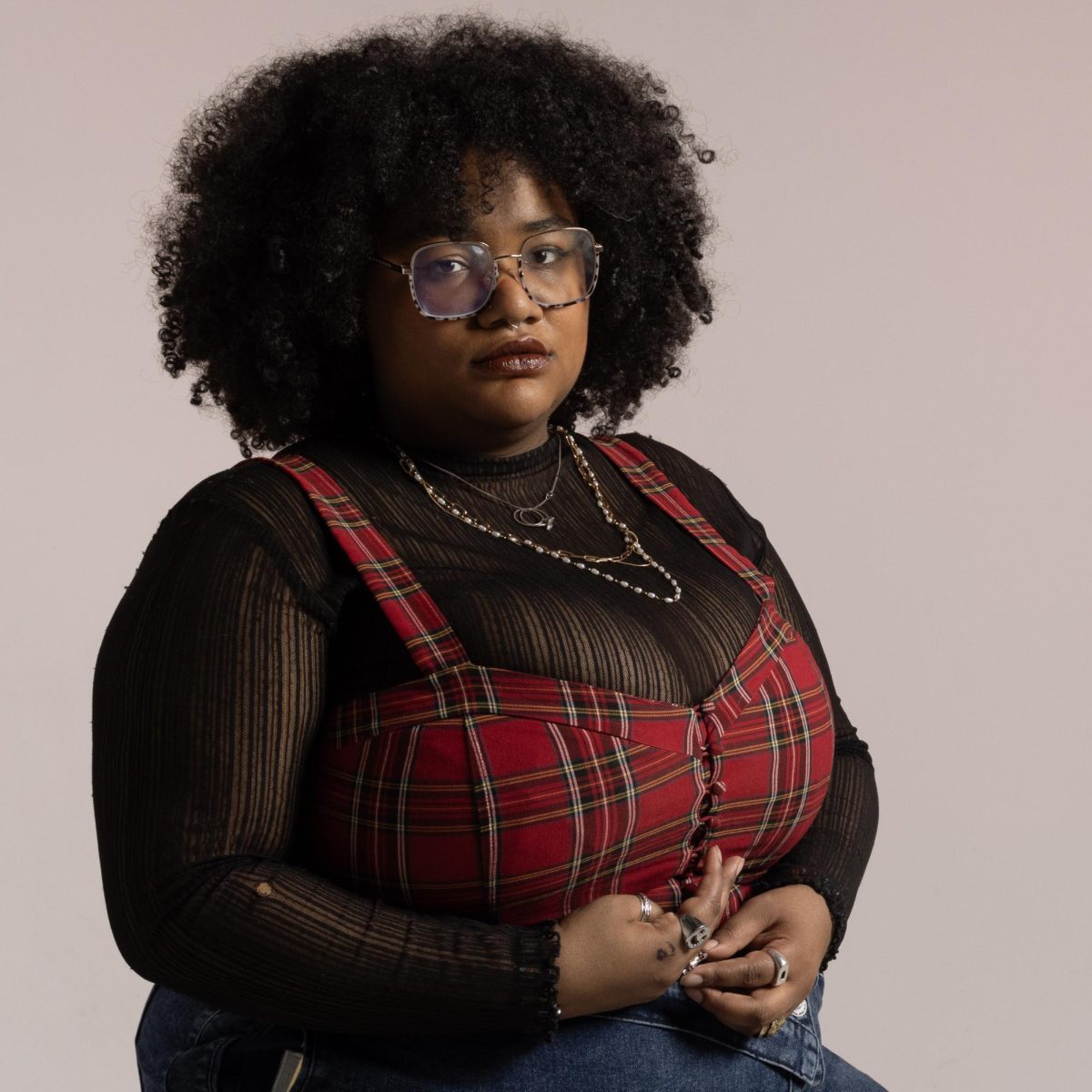
Staff Reporter Mariah Fletcher can be reached at [email protected] or on Instagram @mariahonrecord
Advertisement