Editor’s Note: In an earlier version, two quotes from Student Health Services Director Jamie Clark were mistakenly attributed to Medical Chief of Staff Andrew Riffey. The errors also appeared in the Sept. 10, 2025 edition of the Daily Egyptian. The online story has been updated to correct the errors.
Illinois is expanding reproductive health care access to college campuses beginning this school year, after student activism at the University of Illinois Urbana-Champaign led to a statewide law.
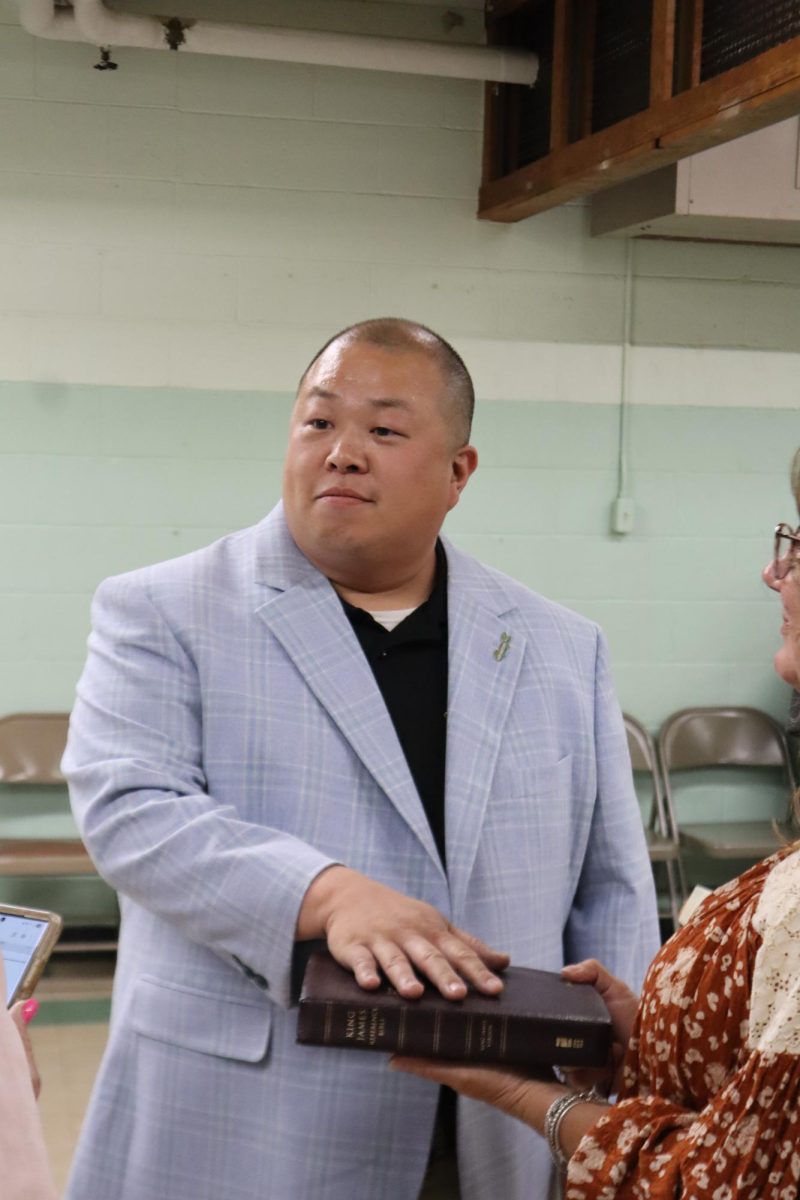
On Aug. 22, Gov. JB Pritzker signed House Bill 3709, amending the Public Higher Education Act to require public colleges and universities with health centers to offer contraceptives and medication abortion available for prescription, beginning in the 2025-26 school year. While the bill did not receive support from southern Illinois leaders, it passed 37-19 in the Senate and 74-50 in the house.
Advertisement
Illinois Rep. Anna Moeller, a Democrat from Elgin, was the bill’s House sponsor. She said the law will help alleviate pressure on local health clinics.
“Illinois has become kind of a haven for this kind of health care in the Midwest. We’ve seen a huge uptick in demand,” Moeller said. “And so having additional facilities who can provide this medication, it helps the whole system. It helps the students and it helps all patients in Illinois who need access to this kind of care.”
According to the bill’s synopsis, it requires public institutions of higher education to provide enrolled students with access to health care professionals that are authorized under state law to prescribe contraception and medication abortion. If there is a pharmacy on campus, it must dispense these medications. In the event of complications, the schools must refer students to tertiary care facilities. The schools are also required to report annually that the provisions have been adopted to the Illinois Board of Higher Education, which is required to post each school’s compliance to its website annually.
Alicia Hurtado, director of advocacy and communications at the Chicago Abortion Fund, an organization that supported the bill with over 200 witness slips, credits student organizers at the University of Illinois Urbana-Champaign for driving the bill.
“They identified a need on their campus and worked with lawmakers to transform what they saw as a gap into really powerful legislation, following the footsteps of students in California and Massachusetts and New York,” Hurtado said.
The fight for statewide reproductive health care on campuses started with the U of I’s chapter of Planned Parenthood Generation Action. Members wrote a referendum that appeared in a late February 2024 campus election asking if students would support on-campus health care centers providing FDA-approved medication abortion.
Sydney Turner, a recent graduate of U of I, said the university was initially resistant.
Advertisement*
“Their logic was kind of saying that, like, ‘students can go to the local Planned Parenthood or other abortion providers to get it, they don’t need it on campus.’ But if we provided that same kind of logic to other forms of essential health care, like medications or care for chronic diseases, those are all things that we consider essential for people’s well-being and lives, and abortion is something that is essential for people’s well-being and lives,” she said.
According to The Daily Illini, the governor’s office became involved after then-co-President of PPGA Emma Darbro spoke at an October 2024 public health conference. Moeller said the office drafted the legislation, then asked if she would sponsor the bill.
“It was decided that legislation would be necessary in order to ensure that these medications were provided, not only at U of I, but at every public university that has a health center in Illinois,” Moeller said.
Turner co-authored the referendum that led to the bill. At the time, she was the health policy director of PPGA.
“My role was to be the person maintaining research and understanding of health policies and reproductive health care in the state, across the country, and to know kind of what the landscape is, and to be really informed about that and to do research for that,” she said. “So helping specifically with the referendum was a key part of my role.”
Turner said the new law is very valuable.
“Now students are able to have that same access to another form of essential health care, and they don’t have to worry about the barriers of potentially having to go off campus or out of state,” she said. “Because (at) the University of Illinois, it can be accessible for some people, because we have abortion providers in town, but not every public college is like that in Illinois and across the country.”
Moeller said the process of receiving this care at student health centers is similar to the process of receiving it at a doctor’s office or clinic.
“They would talk to a health care provider in the health clinic, and then…whether there’s a health exam or consultation, that provider would then write a prescription,” she said. “The student would still be required to pay for the medication, whether it’s through their private health insurance or out of pocket, or if they have insurance through the university. It would not be provided for free. They’d still have to pay for it like they would any other medication.”

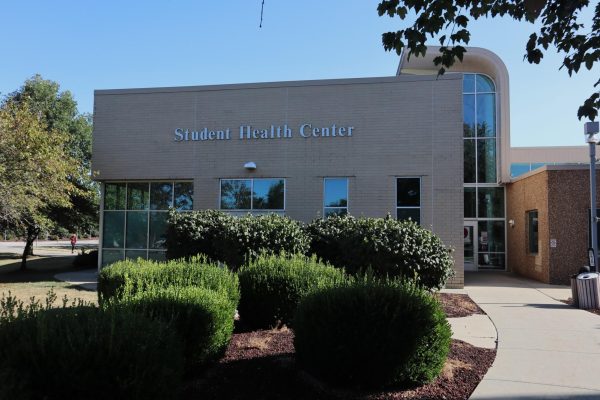
At SIU, students taking in-person classes have full access to the Student Health Center. Jamie Clark, director of Student Health Services, told the Daily Egyptian that the health center has provided contraceptive options for many years now.
“SIU is committed to our students’ physical and emotional well-being, and that includes providing reproductive services such as many forms of contraception and unbiased, medically accurate information in cases of unplanned pregnancies,” Clark wrote in an email.
Andrew Riffey, Medical Chief of Staff, said almost every form of birth control is available to students.
“This includes birth control pills, the birth control patch, vaginal hormonal rings, injectable birth control options as well as Nexplanon and IUDs,” he said, adding that Nexplanon and IUDs are only able to be inserted at the clinic if the student is on the SIU-sponsored insurance plan through United Healthcare.
The medications are available at SIU’s Student Health Pharmacy, which is open to all students, but can be sent to the pharmacy of the student’s choice, Riffey said. Students on SIU’s insurance plan can use the insurance at the campus pharmacy, while students not on the plan can pay out of pocket to have prescriptions sent there. Birth control is also available in the Rec Center vending machine.
When asked if SIU is offering abortion medication, Clark said the university is currently assessing the new law.
“We comply with federal and state laws. As is common when new legislation is passed, we are evaluating the requirements for this new law and determining the safest and most cost-effective approach for the students at SIU,” she said.
Additionally, the health center has a vending machine in the Rec Center with over-the-counter contraceptives, including Plan B (at a discounted price), condoms, pregnancy tests and lubricants, all of which will be charged to the student’s bursar account, Riffey said.
In December 2021, Illinois Rep. Barbara Hernandez, a Democrat from Aurora, introduced a bill requiring public campuses to have at least one vending machine with emergency contraception available for purchase. The bill passed in the House but died when it moved to the Senate for review. Hernandez told the Daily Egyptian that she decided to co-sponsor HB3709 because it was expanding her bill.
“It pretty much makes all of the universities have Plan B, the abortion pills if needed. This is mainly because we want to make sure that the students have access to these in case something happens (and) they’re not able to get to a nearest pharmacy,” she said. “I’ve been to a few universities that might be a little bit more far away from the community itself, and the nearest pharmacy might be 20, 30, 40 minutes away, so you want to make sure that this is accessible to students.”
But in southern Illinois, state representatives and senators voted no to the bill. Illinois Sen. Terri Bryant, a Republican from Murphysboro, told the Daily Egyptian that at the moment, she will not support any bill that moves abortion further down the line.
“We (Illinois) have the most liberal abortion laws in the United States, so we’re not having conversations anymore about what trimester. There’s not even an issue anymore about should a woman have a choice or not,” she said.
Bryant said she believes increasing access to abortion is not about protecting women’s health, but rather a political agenda. As for providing birth control at campus health centers, she said she doesn’t see a need for it.
“To me, it was a shiny object to get people to look at it and say, ‘Oh these people all voted (no) on this because they don’t believe in birth control.’ That’s just not true,” she said. “There’s plenty of access to birth control. You can get it at the Jackson County Health Department. It’s no problem. The first time I went on birth control, I got it in a county health department because I couldn’t afford it, so it’s very easy to get it…So there’s no reason why it has to be done on a college campus.”
Moeller said the law is mandatory, but the Health Care Right of Conscience Act does protect doctors and pharmacists who may have different beliefs, such as religious objections, about if the services are morally acceptable.
“It gives them the right to not administer or dispense these medications, but there has to be someone else who can provide these medications, and they have to provide that information on who else can administer or provide for them,” she said. “So the law is still in effect, but the universities can’t opt out of this. This is a mandated requirement by the state.”
Turner, now in her first year post grad, said that she hopes to see universities implementing the law seriously and urgently.
“I hope that they care about this issue and that universities and colleges understand why this was passed and are in support of it, so that students can get this access as soon as possible,” she said. “Because the bill is supposed to be effective this school year, so right now, but I anticipate that not all colleges and universities are going to go about that the same way, so I just hope that they take it as an urgent matter.”
Deputy editor Carly Gist can be reached at [email protected] or on Instagram @gistofthestory
Advertisement