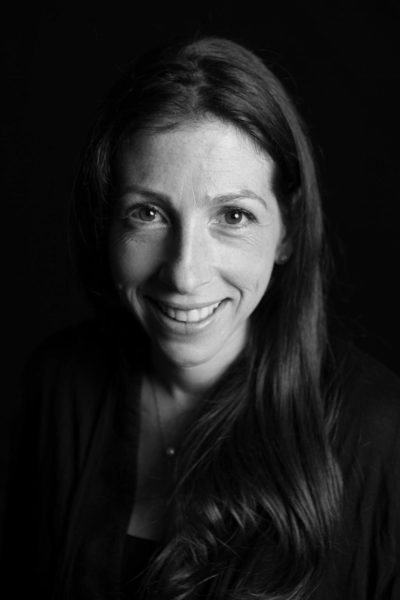
When Hilla Medalia earned an athletic scholarship from SIU, she had a plan: stay in Carbondale for just a year, strengthen her English, compete in the triple jump and major in something fun. Now, in less than two weeks, she’ll be sitting at the Dolby Theatre in Los Angeles for the Academy Awards, a nomination under her belt.
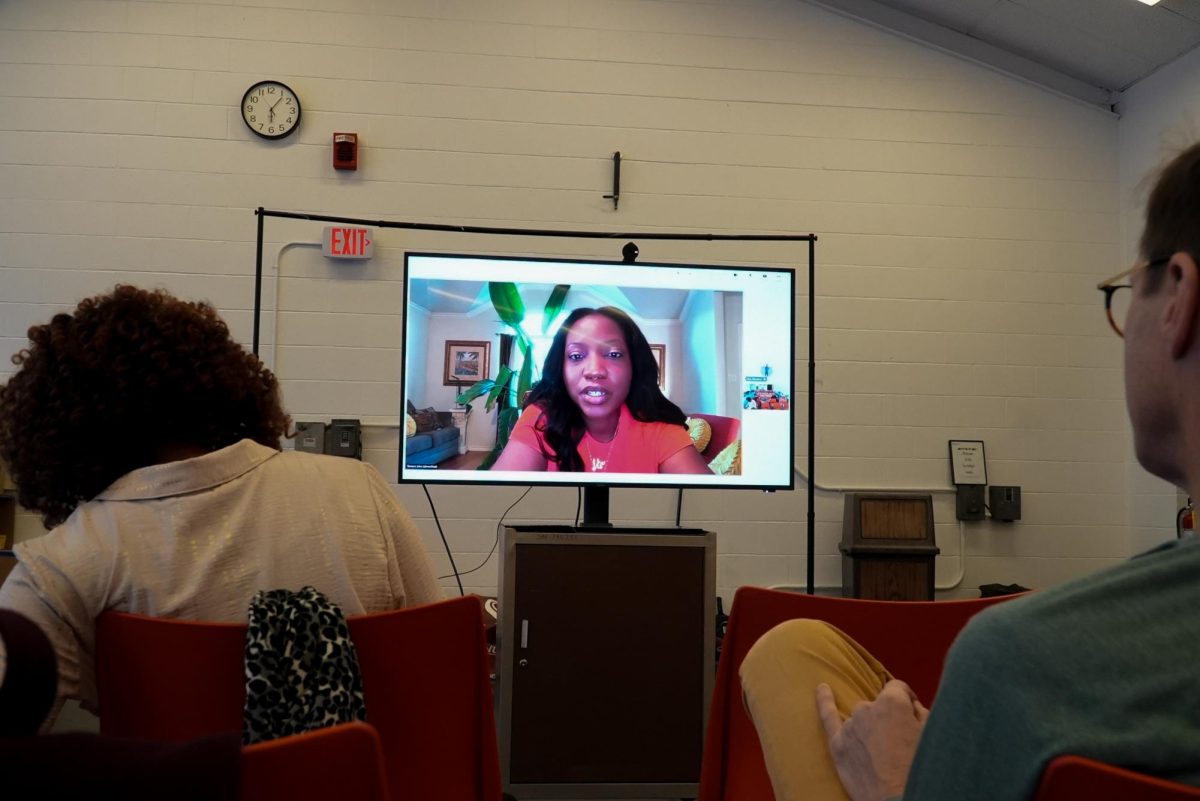
“I always loved film, but I didn’t think of being a filmmaker actually,” Medalia said in a Feb. 24 interview with the Daily Egyptian and River Region News. “You know, some people have a dream to be a filmmaker. I didn’t have this dream, I just really loved film. As part of my going to a college adventure that I thought would be very short, I said, ‘you know I’m just going to do something I love.’ And then I stayed and I graduated and I went onto my master’s, and then I had quite a somewhat fast beginning.”
Advertisement
The Israel native studied radio and television during her undergraduate career at SIU. In addition to track and field, she was a member of Alt News and River Region News. Her fast beginning, however, was kickstarted by her graduate thesis project — a documentary from Tel Aviv about the Israeli-Palestinian conflict. In 2002, Ayat al-Akhras, a 17-year-old Palestinian girl, detonated explosives in front of a supermarket in Jerusalem, killing herself, a security guard, and a 17-year-old Israeli girl named Rachel Levy.
“They kind of looked alike,” Medalia said of al-Akhras and Levy. “They both had long black hair, about the same height. They actually wore the same dress, were the same age. So the film is kind of a journey of the two mothers, the mother of the Palestinian girl, the mother of the Israeli girl, where at the end, they met. And it’s a real reflection of reality back then, and unfortunately still today.”
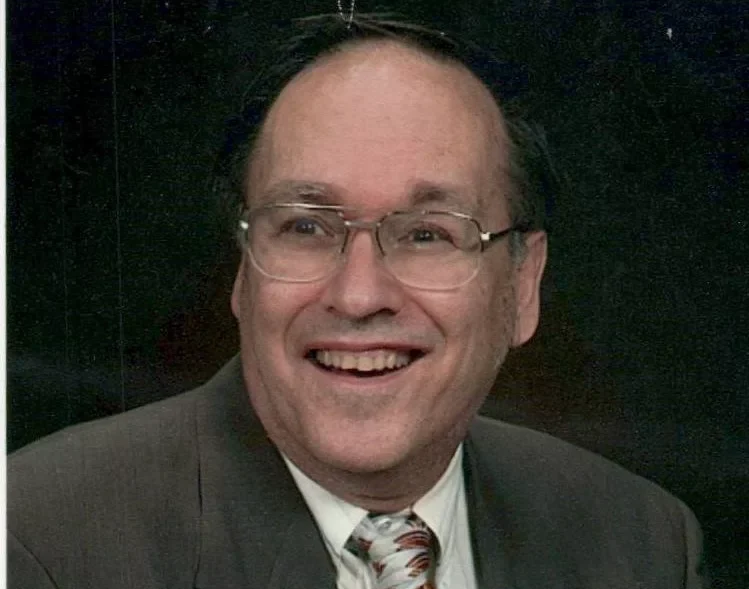
Jan Thompson, director of the Charlotte Thompson Suhler School of Journalism and then-Medalia’s professor, said Medalia raised money on her own to travel to Israel. Alongside two other students, Medalia traveled to the Middle East to interview the mothers of the girls.
Advertisement*
“Hilla was able to go get really compelling interviews and to be able to craft a story that won awards and then open doors,” Thompson said, adding, “This was a huge story, because it was international, and, you know, she’s coming from Little Egypt (southern Illinois), and they’re going to Israel.”
Medalia’s documentary, then called “Daughters of Abraham,” was picked up by HBO, becoming “To Die in Jerusalem.” The parents of the two girls ended up meeting in the version she worked on for HBO, but Medalia said the film still included most of what she did in her thesis project. The documentary won a Peabody Award in 2007.
But before HBO and the Peabodys came around, Medalia’s film went through many extensive edits, Thompson said.
“I think students today need to know that anything is possible, but it’s not handed to you,” Thompson said. “I don’t know how many cuts or takes I saw, but we knew it was going to be special when she came back and we started seeing the interviews and the type of footage.”
Since “To Die in Jerusalem,” Medalia has worked with HBO, Paramount+, Netflix and other streaming platforms in the United States. She said she spent seven years in New York making films, earning six Emmy nominations. She also started her own company, Medalia Productions.
Today, Medalia lives in Israel, and she still credits SIU for her start. She recalled speaking about this with another alum recently.
“We were talking about how the university really allowed us — the geeks that wanted to make a lot of films and wanted to go out and shoot an experience –- gave us the opportunity to do that,” Medalia said. “Unlike many films where a student works for one project, we actually did quite a lot while in my years at SIU … They really pushed us and allowed us to dream, so I think that was incredible and it was a great time.”
Medalia said she has lived in Tel Aviv for 13 years now, and that the last two years have been extremely difficult.
Although the Israeli–Palestinian conflict has been occurring since 1948, it was intensified on Oct. 7, 2023, when Hamas-led militants attacked Israel, killing around 1,200 people, mostly civilians, according to the Israeli Foreign Ministry.
According to the Gaza Health Ministry, over 70,000 Palestinians have been killed since Israel’s initial response to the Oct. 7 attack.
On Feb. 28, the United States and Israel began attacking Iran, leading to a death toll of over 500, 10 of which were in Israel, according to a live tracker from Al Jazeera as of Monday, March 2.
“I keep asking myself, you know, what’s my role as a documentary filmmaker? What kind of story should I tell? What is my responsibility? How do I not become complicit? If I want to make a change, how can I make it?” Medalia said.
Medalia came across a vigil in Tel Aviv in March 2025, in which several women stood silently in a public square, each holding a photograph of a child killed in Gaza, with the child’s name, age, date of death and the words “was and is no more.”
“When I came across this vigil and these activists who are so brave, and so encouraging, and also that there is real power of silence with what they do, it really struck me,” Medalia said, adding, “I experienced the vigil, and I was so moved by the power of silence.”
Medalia said she began working on a film about the vigils in June 2025. By Sept. 23, the documentary “Children No More: Were and Are Gone” was being screened in Los Angeles. The film premiered in November at DOC NYC, an annual documentary film festival in New York City. Each year, DOC NYC releases predictions for awards seasons, and “Children No More” was listed. In December, the film was then shortlisted for the Academy Awards, and in January 2026, it was nominated.
“What’s really meaningful to me in the process is that people are curious,” Medalia said. “So I get an email from my friend who is doing a semester in Michigan, in Ann Arbor, and she wrote to me, ‘I went to the theater, suddenly I see your film.’ So it’s really available to people all over the country, and hopefully all over the world. So for me, beyond the joy and the achievements, what’s most incredible about being nominated is that the film came really out of our hearts, and out of our need to get the message out, and to give a voice to these children, and to talk about the activists. This really gave us an opportunity for more people to watch it.”
Medalia said she thinks the documentary impacts people differently in different places.
“For example, in Israel, we don’t see in the news what you see in the United States, so we don’t see what happens in Gaza,” Medalia said, adding that there is commonly self-censorship of journalists and outlets. “The whole vigil came to bring into this massive anti-war, anti-government protest that has happened for a very long time, very massive in Israel.
“But the protests weren’t to bring the hostage back, to stop the war. It was never about to stop what’s happening in Gaza. So the activists are bringing the voices of those children from Gaza into the public space in Israel. And that’s extremely important. We need to crack the denial. We need to be able to face the truth and what’s happening in our name.”
Medalia said the documentary also highlights the power of protest and how it works to combat division.
“The other thing is the divide,” she said. “There is a big divide in Israel, but that’s also in the United States, when we disagree politically. Of course, about Israel and Gaza, but about everything else. You are pro-Trump, you’re against Trump, and then we can’t talk to each other.
And there is this big gap. And, what’s so incredible with these activists is how they’re able to listen and to take in, even if they want to kill the person who’s screaming at them, and then engage in conversation. So I think there is a lesson to learn from them, for everyone, and I think also that’s partially why we got so far in the race.”
The Academy Awards will be held on March 15, 2026.
Editor-in-Chief Carly Gist can be reached at [email protected].
Advertisement