In the last few years, the Daily Egyptian has emerged as one of the leading sources of investigative journalism in southern Illinois, a place teeming with stories to tell, and hardly anyone to tell them.
Whenever you see an in-depth report about any malfeasance in this region, it likely came from our journalism school — whether from a professor or a student.
While we pour hours into storytelling, we’re also studying for finals, working second jobs, contributing to student organizations and engaging with our community.
Advertisement
We’re not complaining — this is what we signed up for. This is what we are paying thousands of dollars to do. We put extensive time and effort into producing and consuming news, and we’re passionate about it — that is a fact. But facts come with risks.
According to the U.S. Press Freedom Tracker, journalists this past year have experienced over 100 incidents of arrests, targeting, chilling speech and more. Unfortunately, these aren’t abnormal occurrences for a career in journalism. This is to be expected, even for us.
Student newsrooms are not excluded from this chilled environment — the Indiana Daily Student faced doxxing and censorship, The Alestle at SIU Edwardsville reported belittling from the university’s administration and the Columbia Daily Spectator in New York saw federal scrutiny, censorship and administrative pressure while garnering national attention during a year of historic protests.
This being a nationwide issue means it’s happening here, too.
Recently, after the Daily Egyptian factually reported on a chaotic civic situation unfolding in small town America, someone asked us to remove a newsstand from their office. At that office, attached to the newsstand, we found a photo of a reporter with a red “X” across their face. Our professors thought it was a serious enough threat to file a police report.
Putting a red “X” over someone’s face in response to their reporting is nearly the textbook definition of the chilling effect, or something that is intended to intimidate, influence and silence reporters and their sources.
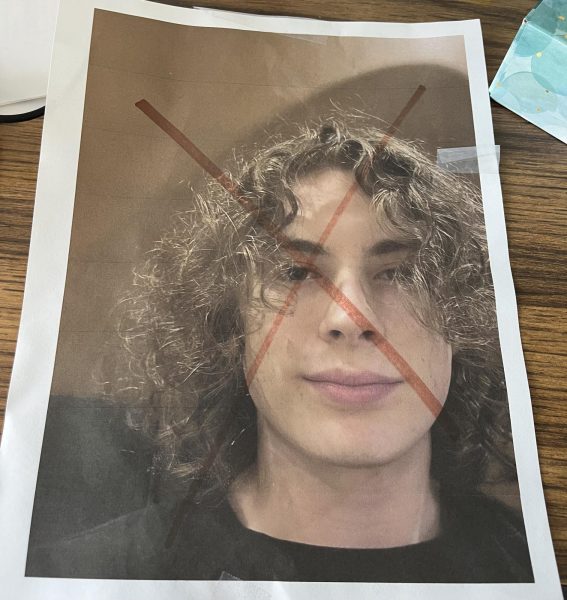
Perhaps this was meant to be a joke. But jokes are supposed to be funny, and there’s nothing funny about this. A red “X” over someone’s face carries a violent connotation. It means elimination. Cancellation. Whatever word you want to use, it’s something along those lines, and it’s not a joke.
Advertisement*
We have never published a single story that we did not go over with a fine tooth comb. Every article is reviewed extensively by a team of editors. We even have lawyers review the tough ones before publication.
When we do make mistakes, which happens, we correct course. We apologize, admit our errors and update our stories with revisions. We want to learn and do better. We welcome all the smoke and feedback from our community. If you take issue with our reporting, please criticize us. It helps us grow, which is why we’re here.
But there is a fine line between criticism and attacks, and that line has been crossed.
Our newsroom is a learning lab for young students to immerse themselves in journalistic practices in order to leave here flourished. The bodies in this newsroom are always changing — experienced seniors graduate and a new wave of freshmen come in to learn, and the cycle begins again.
Despite the constant turnover, our newsroom takes our role in the community seriously, because doing good work here builds the basis of our career, and there are not nearly enough people pursuing the journalism path in this polarized political climate.
Many folks in our newsroom were born and raised in this area. We serve this community not just to gain experience, but because this community is important to us. We care.
Our young student reporters have also landed bylines in organizations like The New York Times, ProPublica, Reuters and Capitol News Illinois. Students are interning in cities around the world in order to hone our craft and bring that knowledge back home to this very newspaper.
As World Press Freedom Day approaches on May 3, we ask our southern Illinois readers to show us compassion. We welcome you to constructively critique us — not send us petty threats — and if you have any ways we can improve, or maybe even a story tip, you know where to reach us.
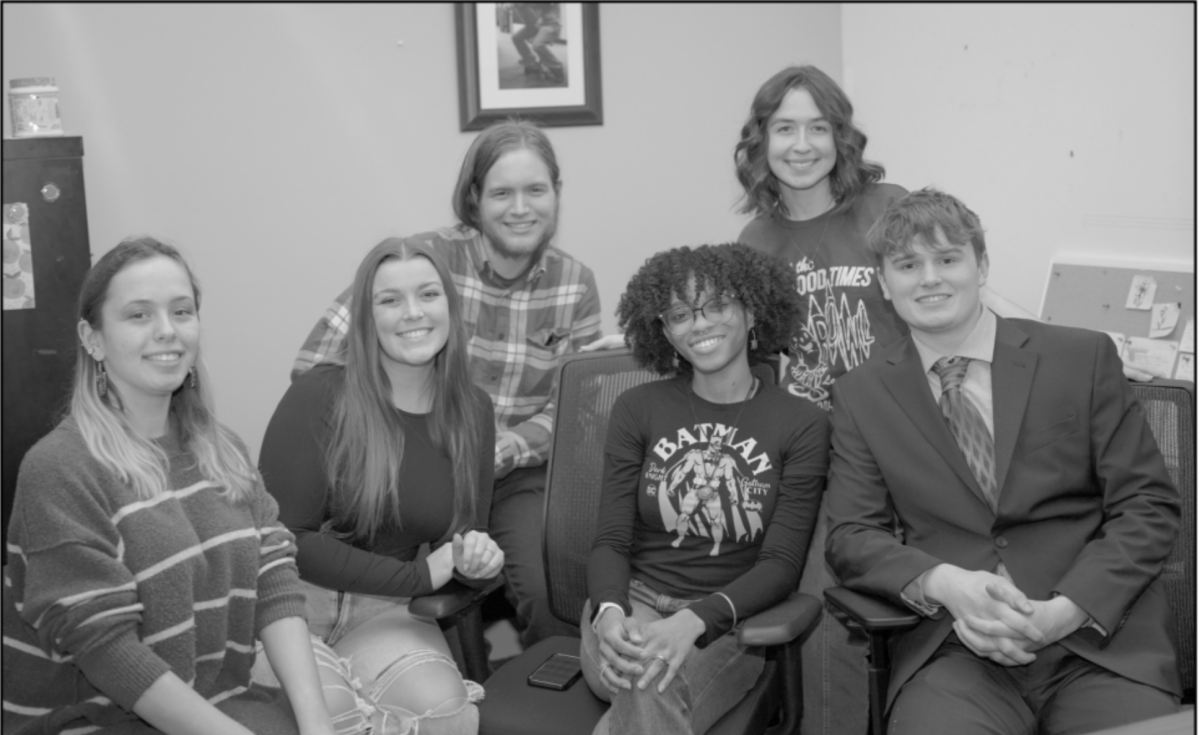
The Daily Egyptian Editorial Board consists of Carly Gist, Lylee Gibbs, Jackson Brandhorst, Peyton Cook, Emily Brinkman and David Starr-Fleming.
Advertisement