Federal immigration agents arrested a Carbondale father and business owner outside of his home less than a month after minor traffic tickets against him were dismissed in court.
Advertisement
Bulmaro Perez Ramirez, who has lived in the United States undocumented for more than 25 years, was taken into custody on March 17 outside of the home where he has lived with his family since 2011, according to relatives. It was his second time being detained by immigration agents outside his residence.
In February, a Perry County judge dismissed two citations — for allegedly speeding and driving without a valid license — that stemmed from a September traffic stop in Du Quoin, court records show. It was the 52-year-old’s first violation of southern Illinois law in two decades.
On the morning of his arrest, Perez Ramirez was in his front yard working on a lawnmower for the landscaping business he started in 2018, unaware that federal agents were waiting nearby, his family said.
About 10 minutes later, his daughter Fernanda heard him yelling her name.
“I thought he just needed something from me. He usually yells my name from outside whenever he needs help while working,” Fernanda said. “As I was walking out of my room, I heard him calling my name again, this time, more frequently and louder.”
When Fernanda opened the door of her childhood home and looked out into her front yard, she saw what no daughter of an immigrant ever wants to see — plainclothes immigration agents with vests emblazoned with “police” and “ICE” arresting her father.
“Two ICE agents on each side of him,” she said. “They were walking him out to their car.”
Advertisement*
Fernanda rushed back inside and began yelling to her family “they’re taking him, they’re taking him!”
She then went back outside and started running toward them, but she didn’t know what to do.
“I froze,” she said.
Perez Ramirez directed Fernanda to call her mother. She ran back inside to grab her phone. With shaking hands, through tears, she explained to her mom what was happening.
“I was crying,” Fernanda said. “I told her that they had come for dad, and that I didn’t know what to do, and that’s when she started walking me through the whole thing. You see all these videos and information about what to do when ICE goes to your house — but all of that went out the window.”

As agents began to drive away, now with her father in the back of a car, Fernanda ran down the street to catch up to them. A few of them stayed behind and talked with her, and she asked the agents why they were arresting him.
“They didn’t tell me,” said Fernanda. “I asked them if I could talk to him, and they were like, ‘No, you can’t talk to him and you can’t see him.’”
An ICE spokesperson did not respond to multiple requests for comment on this story.
According to Fernanda, the agents told her that they were going to take her father to St. Louis, and from there her father would call her. After that, they would then transfer him to the Ste. Genevieve County Detention Center in southeastern Missouri.
The federal officials asked Fernanda to go get her father’s diabetes medication, which she was finally able to get after convincing her family to let her back inside their house — in fear of the agents, they had locked themselves in, and her out.
Fernanda said she waited for the agents to step outside of her family’s property before she was let inside her home. “I grabbed his medicine,” she said. “I was shaking. I don’t even think I gave him enough for a month.”
In the rush of the situation, Fernanda admits that she didn’t think of asking the immigration agents to see a warrant authorizing the detention of her father.
“And that was that,” she said. “That’s when they left.”
Later that afternoon, Fernanda said she got the call from her father, in which he was able to recount what happened from his perspective.
“Our dad told us his story,” Fernanda said. “He said that he saw them at first, but that he didn’t know it was ICE, because he only saw them from his peripheral vision.”
Thinking nothing of it, Perez Ramirez told his daughter that he went to work on his lawnmower until he heard voices calling him from behind. Assuming that it was a neighbor who needed help, he turned around, only to see what he described as police officers in his front yard.
“He said that, allegedly, one of them pulled a gun on him,” Fernanda said. “That’s when he said that he started screaming my name.”
This was not the first time that Perez Ramirez had been arrested by ICE. In 2011, he was arrested and subsequently deported back to Mexico, but this time, he told his daughters the agents were not nearly as aggressive as back then.
“He said that they weren’t as aggressive as the first time, because the first time it was really aggressive. This time, he said that they did almost tackle him down on the ground, but that they were nice,” Fernanda said.
“One of the guys even asked him if he wanted his daughter to have his personal items. And he was like, ‘Yeah.’ So they gave me his stuff that he had. The first time, they took everything that he had on him.”
‘He needed everything’
Perez Ramirez came to the United States in 1999 in search of what his family described as “necessities.”
“He basically grew up with nothing,” Fernanda said of the stories her parents would tell her about her father’s past. “He needed everything. He didn’t have toys. He didn’t have clothes. He’s always been working — since he was a kid. To go to school, he had to walk two hours there and two hours back. Sometimes he would say that his grandma gave him food because at home they didn’t have any.”
He grew up in Motozintla, a city of just under 80,000 people in southern Chiapas, Mexico.
Perez Ramirez had been in southern Illinois since 2001. From then until 2006, he struggled heavily with sobriety.
“Before, when he used to drink, he would spend it all on drinking with himself and his friends,” Fernanda said, recalling what her mother would tell her about the beginning of her parents’ relationship. “Then on Mondays, we didn’t have any money. Our mother would gather cash to help him with the bills, with the food. That’s why she never stopped working. It was really irresponsible. He wouldn’t even pay the babysitter.”
From 2001 to 2006, Perez Ramirez accumulated a string of DUIs and various traffic violations in Jackson County, records show. In 2007, Ramirez was released from jail after an 11-month stint and came out a completely different man, vowing to change his life forever, according to his family.
“He stopped drinking completely,” Fernanda said. “After that, everything changed. He started putting his family first. He started spending more time with us, talking to us more, being there more. You could really see the difference in him.”
For 20 years, Perez Ramirez hasn’t had a single sip of alcohol, according to his friends and family. He’s become an active member of his church and his community and has built a robust clientele through his landscaping business.
His family said that during his time in jail, Perez Ramirez had really found God.
“He was always a believer, but he just wasn’t on the path. He was believing — but not practicing,” Fernanda said.
Despite his religious rebirth and clean record since 2007, his past still follows him.
In 2011, his then-4-year-old daughter, Julissa, watched as her father was “violently” detained by ICE agents outside of the very same house that they live in today.
“We had recently moved there,” Julissa said. “That day, it was about late morning, mid-afternoon. They came in a red pickup truck, and I remember it so vividly. Two guys came out, and they didn’t look like regular ICE agents. They just looked like civilians, so it really kind of threw me off. They beat my dad to the front of the car. They stunned him on the hood, and then they just handcuffed him and took him away.
“I didn’t know what it was about, I didn’t understand, because I was so young, but I just know that whatever happened was something I shouldn’t have been able to see,” Julissa said. “I shouldn’t have even been there.”
Ramirez was then deported to Nuevo León, Mexico — a place he had never been before. He had no family there, no friends and nowhere to go but north — back to his family in Carbondale.
‘It’s going to be very difficult’
Four months later, Ramirez was reunited with his family — still undocumented and, in the eyes of the Department of Homeland Security, still in Mexico.
According to those closest to Ramirez, when he came back to the U.S. in 2011 after being deported for the first time, he began ramping up his attempts to achieve citizenship status in the U.S. Knowing that it would be a tall task, he began working with a lawyer and members of his church to clear his record and to ensure that he had no run-ins with law enforcement that would jeopardize his or his family’s livelihood in Carbondale.

“After all of those DUIs and being deported, he went to pastors, and they helped him get legal resources,” Fernanda said. “At church, he would say in his testimony about how he used to be, and how after he got in trouble with the law, it changed him — mentally, physically — and that’s why he is the way he is now. His view on everything changed.”
Becoming a naturalized U.S. citizen as an undocumented adult with even the most mundane criminal record is nearly impossible, according to SIU Immigration Law Professor Cindy Buys.
“It’s going to be very difficult, if not impossible, for this man to ever obtain U.S. citizenship,” Buys said. “Normally, if you are being deported a second time, you don’t even get to see a judge — they can deport you with very little due process. If you’re deported a second time, the statute typically says that you are never eligible to come back without a discretionary waiver from the attorney general. So the family would literally have to apply to the U.S. Attorney General, and ask the attorney general to exercise discretion to waive this ban on his return to the United States.”
In the case of Ramirez, whose daughters are legal U.S. citizens through birthright citizenship guaranteed by the 14th Amendment, there is a narrow but potential path to citizenship for him. Fernanda, who turned 21 in December, had just begun the process of sponsoring her father through the Petition for Alien Relative Form.
This would be a long and arduous process in which Fernanda would be attempting to get her father a Green Card, which would make him a permanent resident of the U.S. and would allow him to eventually apply for citizenship.
“It is possible for a child, who is a U.S. citizen at age 21 and above, to sponsor a parent,” Buys said. “But the parent has to basically have a clean record in order to apply for a Green Card and then ultimately to apply for citizenship. So, while there is a path for a 21-year-old U.S. citizen daughter to sponsor her father, the father’s record still matters.”
However, the difficult timeline and unlikelihood that citizenship would be obtainable were of no concern to their family lawyer, who raised a much more daunting red flag.
“We were telling the lawyer that he had a court date for the traffic ticket,” Fernanda said, “and that’s when the lawyer told my dad, ‘I don’t recommend you stepping foot in court, because they’re going to see that you were deported in 2011.”
But that wasn’t an option for Perez Ramirez. On Feb. 25, he had to appear in court in front of Perry County Judge James Campanella for the tickets he received in Du Quoin a few months prior while driving his family back home from St. Louis. He was driving 45 in a 35-mile-per-hour zone with an invalid license.
“We’d seen on social media that when people go to court, ICE would take them immediately from court,” Fernanda said. “That’s when I started thinking, ‘They might take him.’”
During court, those tickets were dismissed, and nothing happened to Perez Ramirez that day, allowing his family to breathe a sigh of relief. However, according to the counsel he had with him during that hearing, Campanella told Perez Ramirez that he had “bigger problems.”
According to his counsel, Campanella asked Perez Ramirez about his citizenship status during his hearing. Being under oath, he told the judge the truth.
“When the court day had gone fine and nothing happened — we thought everything was good,” Fernanda said. “We thought ICE wasn’t gonna come anymore. But we got too comfortable in the situation.”
‘Boomer was there for me’
Dolores Lovell, a woman in her 70s, has been a client of “Boomer,” as she calls him, for over five years. Each year, right around this time, Lovell looks forward to Perez Ramirez’s presence as he helps prepare her yard for spring.
“I’m a senior citizen, and there are days when I just cannot move,” Lovell said. “Boomer was there for me.”
According to relatives, Perez Ramirez is always working and has been doing lawn care in southern Illinois since 2011.
“When his company first started, it was just him, and we all had to help — my mom, my sister and me — because he didn’t have workers yet. It was really small, but little by little, he built it up,” Fernanda said.
When he started his own landscaping business in 2018, the family struggled as Perez Ramirez sacrificed consistent paychecks to take a risk with his own entrepreneurial endeavor.
“I remember the first few years, we were struggling with money, but he kept working, and eventually we started doing well financially because of his work,” Fernanda said.
That work, according to Lovell, Perez Ramirez is very good at.
“He’s very conscientious about his work — he’s a very hard worker,” Lovell said. “He would always try to accommodate me with the times that I was available. He is reasonably priced and a very generous individual. I just can’t say enough about him. I’m heartbroken over what’s happened to him.”
Within the past few years, his business has really started to flourish, and as winter turned to spring, his phone has been ringing off the hook with calls asking for Boomer’s lawn care service.
Now, as Perez Ramirez sits awaiting deportation in a Missouri detention center, his daughters have been tasked with assuming his clientele during the busiest time of year.
“I’m basically handling his business while also going to school and working my own job,” Fernanda said. “It feels like I have three jobs at once. We don’t even know how many clients he has. It’s a lot.”
The daughters have been mostly hands-off from the business since it began expanding as of late, and said that they didn’t even know how their father organized the paperwork, records and properties that he tended.
“One client canceled on us, and I just broke down because I was thinking, ‘We just lost money, I don’t know how I’m going to tell my dad,’” Fernanda said.
Fernanda and her sister Julissa both work jobs while they attend school, and will have to communicate with clients like Lovell to prevent further cancellations.
“His family,” Lovell said, “I’ve met them, and they’re wonderful people, very friendly, very kind. And I just hate to see them have to go through this.”
Along with Lovell, members of his church community and neighborhood have spoken highly of Perez Ramirez, echoing sentiments from his daughters which describe him as “friendly” and “lovable.”
“He’s a really friendly person,” Fernanda said. “He’ll talk to anyone, even if he doesn’t know them. We joke that he knows everyone in Carbondale.”
“He’s really lovable,” Julissa added. “We’ve never really heard anyone complain about him. People always say, ‘I love your dad, he’s so sweet.’”
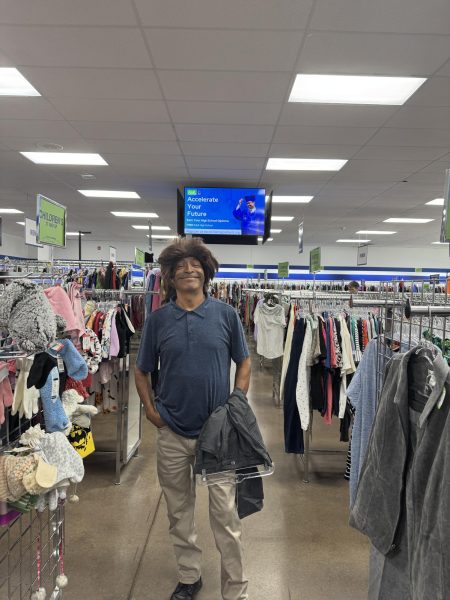
Lovell said that if she ever needed anything done in her yard, Perez Ramirez and his workers would make it happen.
“He contributes to the community. He is a God-fearing man. That they would even bother with such a man … it’s just … I’m flabbergasted,” Lovell said. “Everyone deserves second chances. He built himself a business. Me being a senior in my 70s — he was a Godsend to me. I just can’t imagine starting my year off without him here.”
‘Everything right now is just overwhelming’
Perez Ramirez is currently in the Ste. Genevieve Detention County Center in Ste. Genevieve County, Missouri — the same place that the six men who were apprehended by ICE in Du Quoin were taken earlier this year.
On Sunday, Fernanda and her sister Julissa went to visit their father, arriving two hours before visitation hours began, because visitation is on a “first come, first serve basis,” according to detainees in the facility.
Perez Ramirez’s daughters said that, despite his detention, their father is still in good spirits, that he’s already making friends, and that to him, there is a reason for everything — even this.
According to Fernanda, her father told her that he’s spending most of his time in Ste. Genevieve talking to others, just as he had been doing in Carbondale for her entire life.
“He’s like, ‘Well, I think I’m here because I’m here to talk to them, because they have no one to talk to,” Fernanda said. “He’s always uplifting other people before himself. He always thinks of others first.”
While their father makes friends awaiting his imminent deportation back to Mexico, Fernanda and Julissa will continue trying to navigate a world without him while living in a home that they say is noticeably quieter than usual.
“It’s really quiet,” Julissa said. “Whenever he was at home, he was always making jokes. He’s always laughing. Now, everyone is so depressed. It feels like we’re not even at home. It just feels like it’s just another day, and we’re going to be worrying about that day.”
Lovell said that she feels for the daughters and hopes that they’re able to carry on with their lives as best they can.
“I just cannot believe that ICE is being allowed to move around in southern Illinois,” Lovell said. “I just cannot believe it. I really think that they have started corralling people who have been a contributing asset to our community.”
In the week that followed their father’s arrest, both Fernanda and Julissa struggled at school and work. Fernanda said she had a panic attack, and Julissa said that going to class was impossible.
“I was trying to handle everything, and it just all hit me,” Fernanda said. “This is affecting my schoolwork,” Julissa added. “I’m missing classes, and I don’t know how I’m going to keep up. I worked really hard for my scholarship, and I don’t want to lose it, but everything right now is just overwhelming.”
Perez Ramirez’s family is seeking legal counsel in hopes that an immigration lawyer would be able to, at the very least, figure out a way for them to see their father once more before he is deported back to Mexico.
“I wasn’t able to say goodbye to my dad that day,” Julissa said. “That’s something that’s been on my mind ever since.”
Fernanda said she wants the community to know that her father is a good man.
“He isn’t a danger to the community,” she said. “He made mistakes, all those years ago, but I think he’s already repaid those mistakes.”
News Editor Jackson Brandhorst can be reached at [email protected] and on Instagram @jacksonothtml
Advertisement