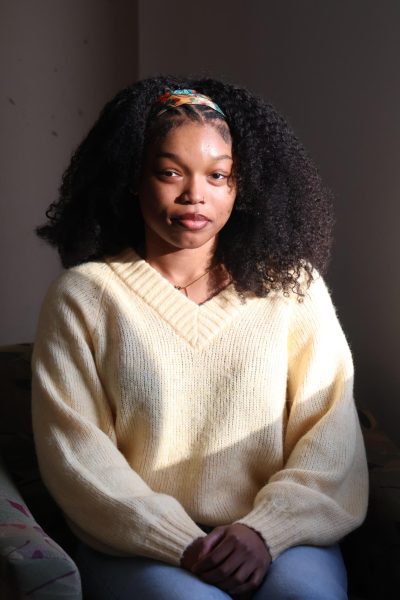
Cierra Anderson, a junior nursing student at Southern Illinois University, said she adjusts her speech and behavior to fit into predominantly white environments, a practice known as code-switching.
Code-switching refers to the practice of voluntarily changing one’s behavior, speech, appearance or expression to fit into a specific environment — usually the dominant culture of the environment. According to research done by Danielle Dickens and Elizabeth Chavez in the journal “Sex Roles,” code switching is often a survival or coping strategy to avoid bias, be heard and feel safe.
Advertisement
For Black Americans, code-switching has opened doors to professional success. On the flip side, it carries a heavy collective toll on mental health, community connection and personal identity.
“I feel like I’ve gotten so used to sort of code-switching,” Anderson said. “I kind of have to shrink myself down in a way to make myself palatable for my environment.”
Anderson is from the Chicago suburbs. Her upbringing encompassed a changing environment that shifted from predominantly white to more diverse as she grew up.
Advertisement*
“I really only came here (SIU) because my friends came here, and I was like, ‘Well, it has a nursing program. That’s pretty good. Why not?” she said.
Anderson said she originally wanted to attend a historically Black college or university.
“I really wanted to go to an HBCU,” Anderson said. “I didn’t want to have to code-switch and change who I was. I wanted to meet people that were like me.”
Anderson said adjusting to SIU has required constant awareness.
“I’m very vigilant,” Anderson said. “I know it’s not a red county (Jackson County), but it feels like a red county … especially the fact that Anna, it’s not that far away, and that is a sundown town.”
Jackson County is a political anomaly in southern Illinois because it is home to Carbondale and SIU, which host a diverse population, including a higher proportion of educated individuals and younger people than the surrounding areas. These demographics — the literate and youthful — statistically lean Democratic.
Surrounding counties — Williamson, Perry, Franklin, Randolph and Union counties — overwhelmingly lean Republican as they are rural, agricultural and culturally conservative.
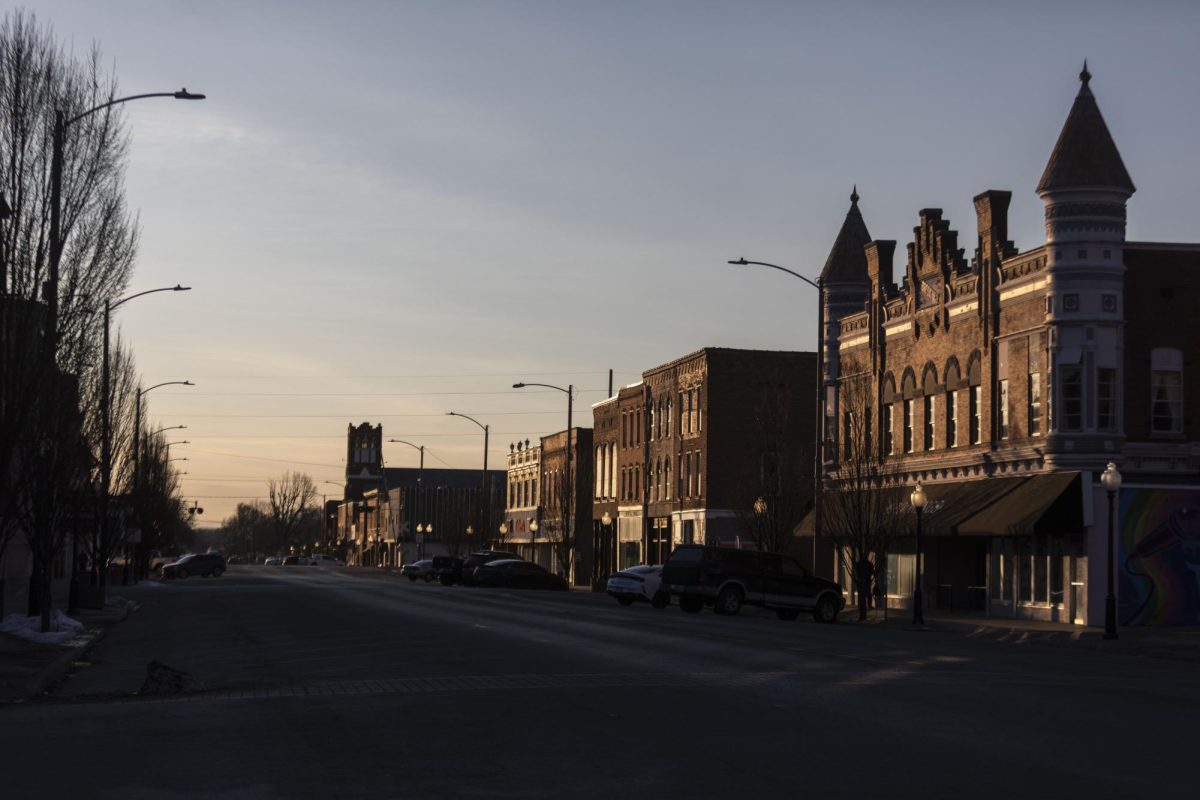
Union County is home to Anna. For generations, local folklore has said that the name A-N-N-A was used as an acronym that included a racial slur for Black people and that meant they were “not allowed” in the town. Sociologist James Loewen’s research confirmed Anna was a sundown town and acknowledged the acronym, while not the origin of the town’s name, had reinforced southern Illinois’ informal racial segregation.
Anderson recalled an instance when her friend drove through a community known for being a former sundown town.
“She drove through a sundown town and just put on the gas the entire time,” Anderson said.
Anderson said she found support by connecting with other Black women in the nursing program.
“I definitely had to find my group,” Anderson said. “As much as I love the other girls, it means a little more being able to make a community in the nursing community.”
Anderson said her generation seeks accountability rather than sympathy.
“My generation is stubborn in a good way,” Anderson said. “We’re not asking for a pity party, we’re asking for reflection and understanding.”
Anderson said she hopes Carbondale becomes more diverse and welcoming in the next decade.
“Diversity has to be there. It has to be more diverse,” Anderson said. “I’d like to see communities coming together and building up this city.”
Anderson said she wants future students to feel at home in Carbondale and that she wants it to feel like a place she could call home herself – without feeling like she is walking on eggshells.
She is pursuing a career in nursing — a profession rooted in care — turning her experience into a tool for service.
News Reporter Trevor John can be reached at [email protected]
Advertisement