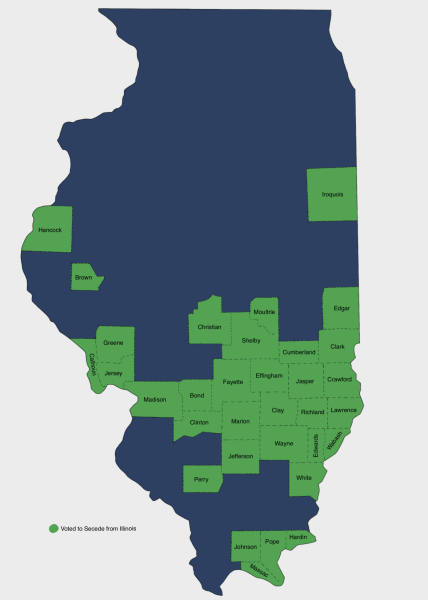
Many Illinois voters walked up to the ballot on Nov. 5 of 2024 and found a referendum that asked constituents to vote for whether or not they wanted to secede from Cook County, which includes the majority of Chicago.
The referendum that appeared on the ballot read, “Shall the Board of (the respective) County correspond with the boards of other counties of Illinois outside of Cook about the possibility of separating from Cook County to form a new state, and to seek admission to the Union as such, subject to the approval of the people?”
Exactly 33 counties in Illinois have voted for this measure since 2020, including the seven counties that voted during the 2024 election cycle: Madison, Clinton, Perry, Jersey, Green, Calhoun and Iroquois.
Advertisement
Many questions have arisen about what exactly the counties want out of these votes, or if any of their expectations are even possible. Some groups want to make a new state, separated from Chicago.
Indiana, however, had a different offer for the Illinois counties.
On Feb. 20, Indiana Republican House Speaker Todd Huston said, “If Illinois residents and counties are looking for something different, we’re simply raising our hands and saying, you’d be welcome in Indiana.”
Huston introduced a bill to look into the boundary between Illinois and Indiana, and created the Indiana-Illinois Boundary Adjustment Commission.
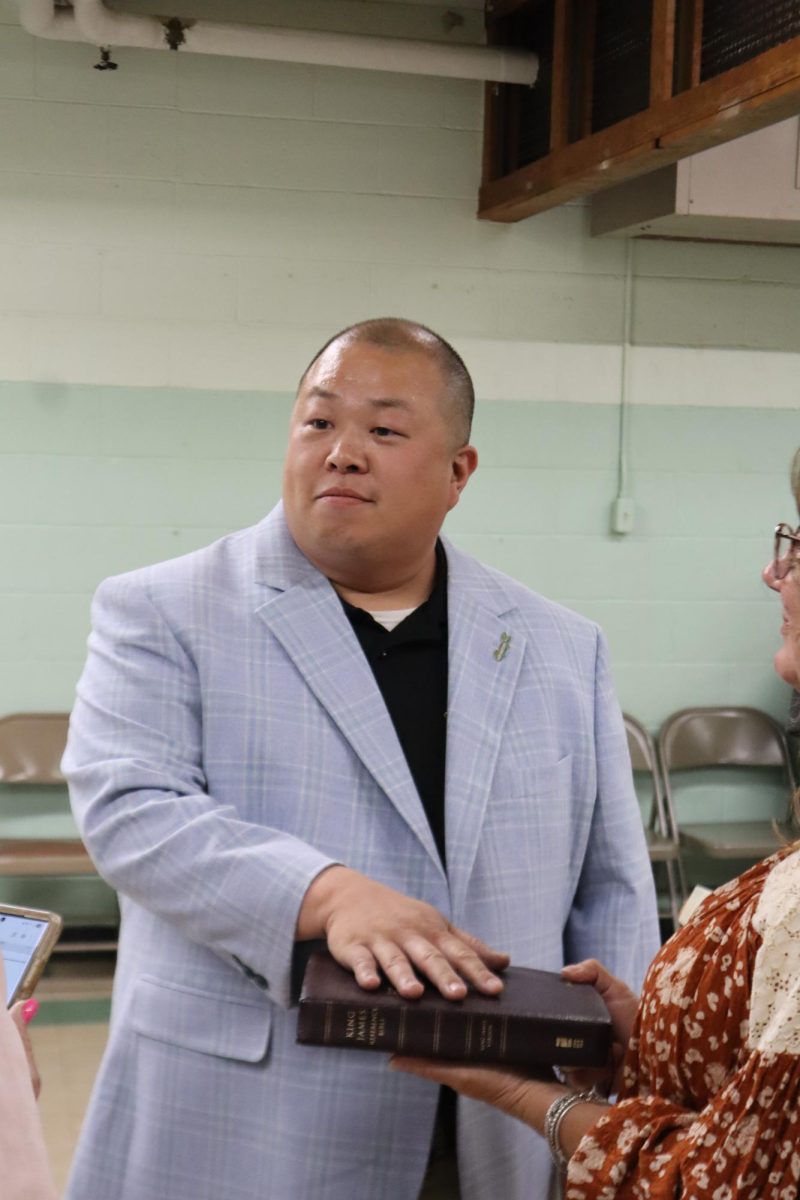
Indiana’s Republican Gov. Mike Braun chose the members of the Commission. Six members were required for the commission to be able to take official action, and without Illinois passing official legislation, the commission would need six members from Indiana to accomplish anything.
The commission has five seats available for Illinois to fill if it passes matching legislation.
On Oct. 22, the Indiana-Illinois Boundary Adjustment Commission had its first annual meeting to discuss the logistics of what this boundary adjustment would look like.
It is a part of an effort to “free good people from bad Illinois law,” said Scott Carpenter, a member of the Downstate Illinois Secession, a group that has advocated for the separation of southern Illinois counties from the state. He cited “immigration, sanctuary laws, marijuana and abortion centers” as the laws he deemed to be “bad Illinois law.”
Advertisement*
Carpenter presented remotely to the commission from his home in western Indiana.
Many other concerns arose around taxation and how people do not feel represented by Chicago and how it controls the political leaning of the state in most elections.
John Jackson, a visiting professor at SIU’s Paul Simon Public Policy Institute and professor emeritus of political science, cited a long history of quarrels between Chicago and other Illinois counties.
Jackson referenced “Forgottonia,” a movement from the 1970s in western Illinois where counties in the area wanted to secede.
“It was the same set of complaints,” he said. “Chicago gets everything and they don’t treat us well and we don’t like their culture or their politics.”
This animosity isn’t new, and it is not accepted by the Illinois government as a legitimate issue.
Illinois Gov. JB Pritzker has outright denied any attempt of Indiana or the counties to bring this kind of change about.
In a press conference in early January, Pritzker said, “It’s a stunt. It’s not going to happen.”
The United States Constitution forbids any kind of secession or change of state lines without the consent of those affected, meaning both states and the federal government.
Without the support of the Illinois government, this attempt by Indiana will go nowhere, Jackson said.
Instead of creating divides within Illinois, Jackson had a different suggestion for the people of Illinois.
“We ought to be looking for solutions to our problems and the leadership should stop implying that if we just got rid of Chicago, all of our problems would disappear because it’s not true and it’s dishonest,” he said.
Staff Reporter Orion Wolf can be reached at [email protected] or orionwolf6 on Instagram
Advertisement